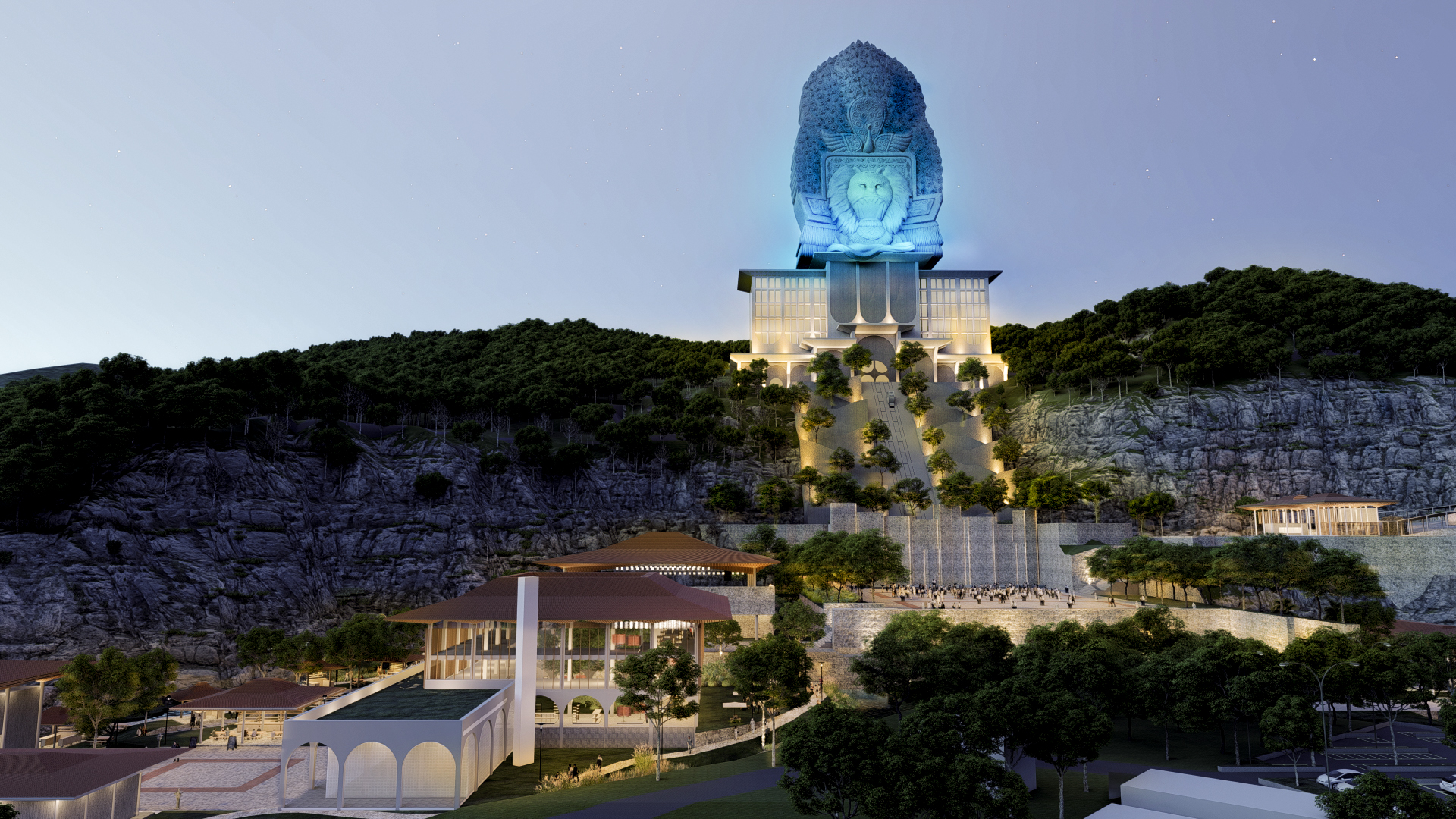
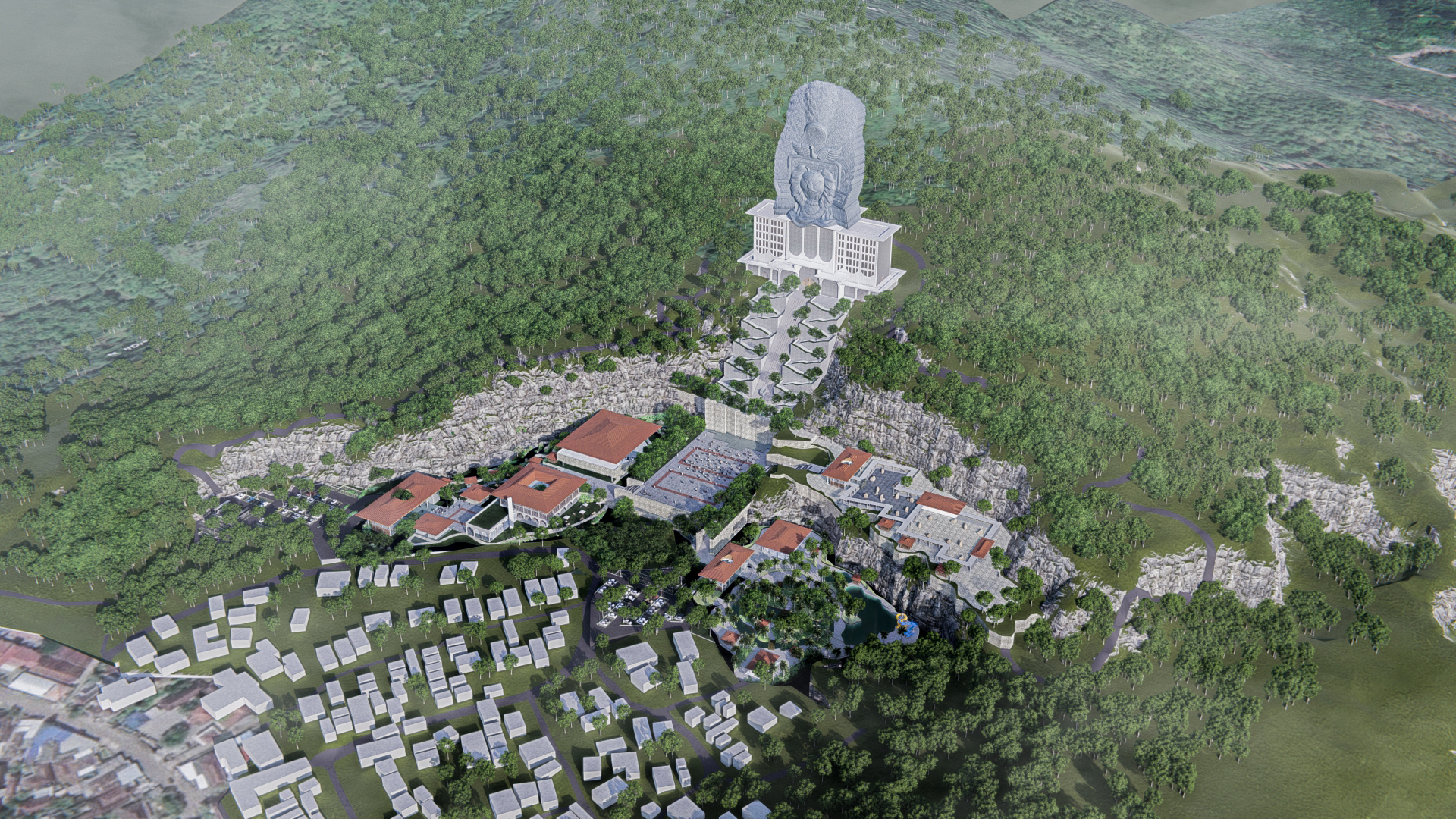
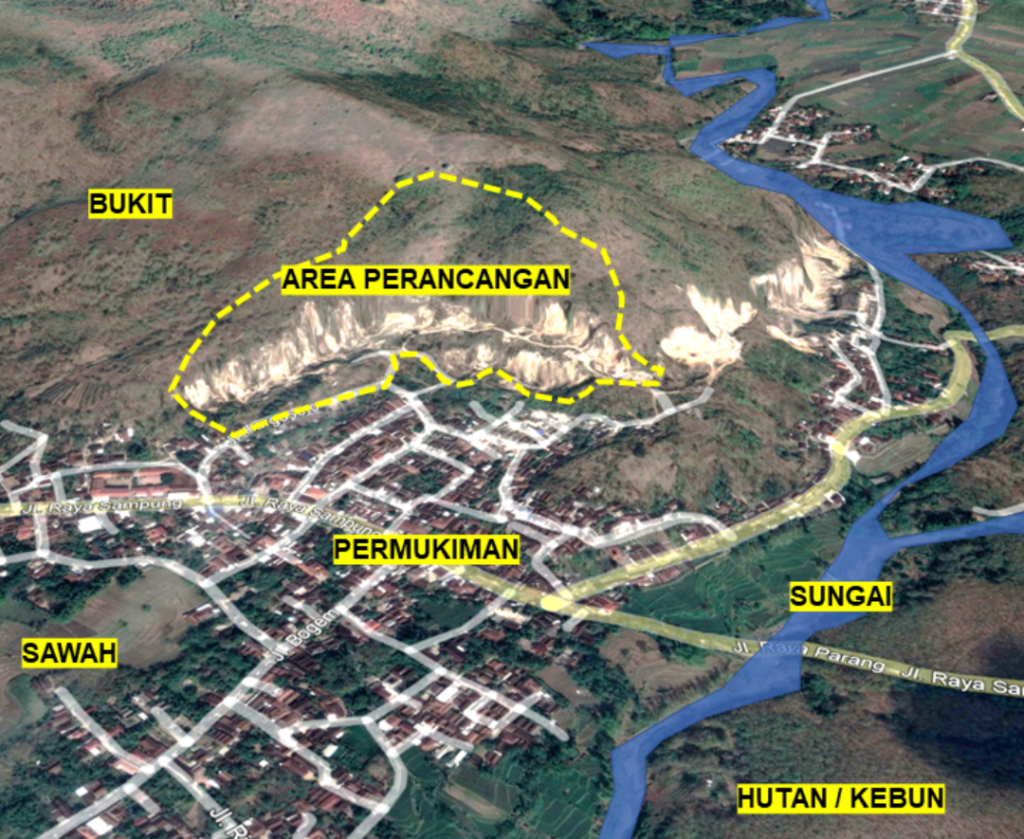
The Reog Ponorogo Monument is located in Sampung District, Ponorogo Regency, East Java. The site is surrounded by hills, residential areas, rice fields, rivers, forests, and plantations. Besides functioning as a monumental landmark, the project also provides spaces for various cultural activities and events.
Location
East Java, Indonesia
Programs
Monument, Landmark, Cultural Development
Status
Competition 1st Winner
Sustainability Through Land Restoration and Water Conservation
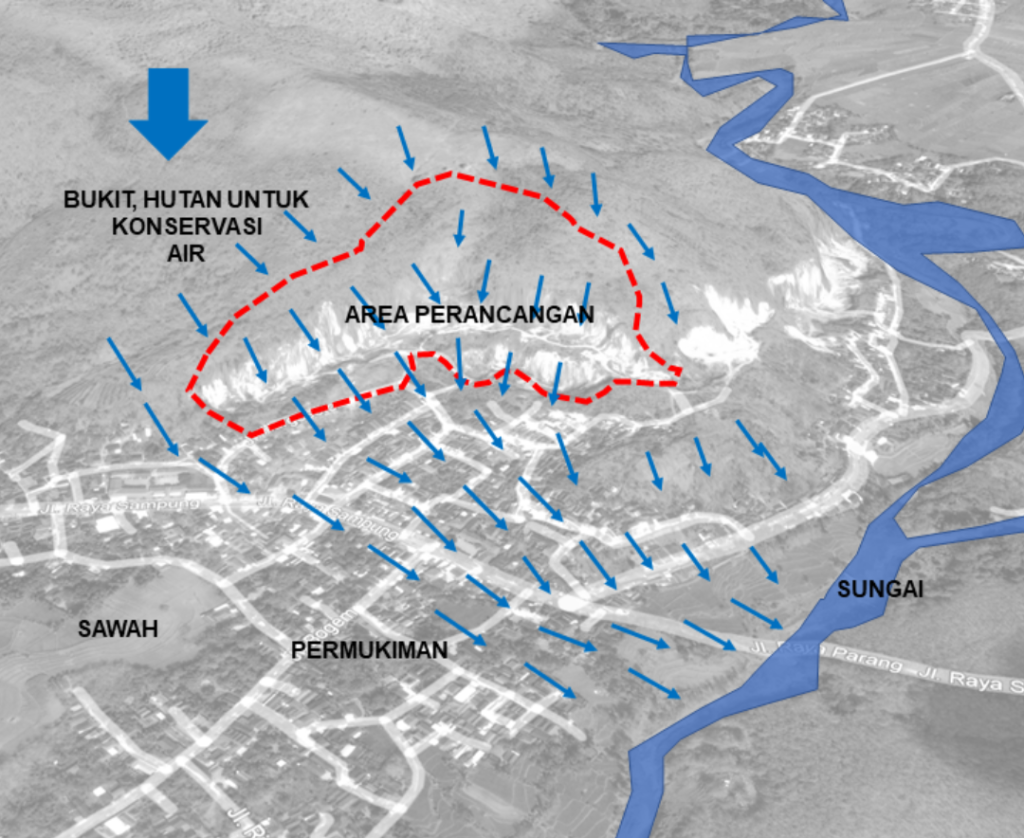
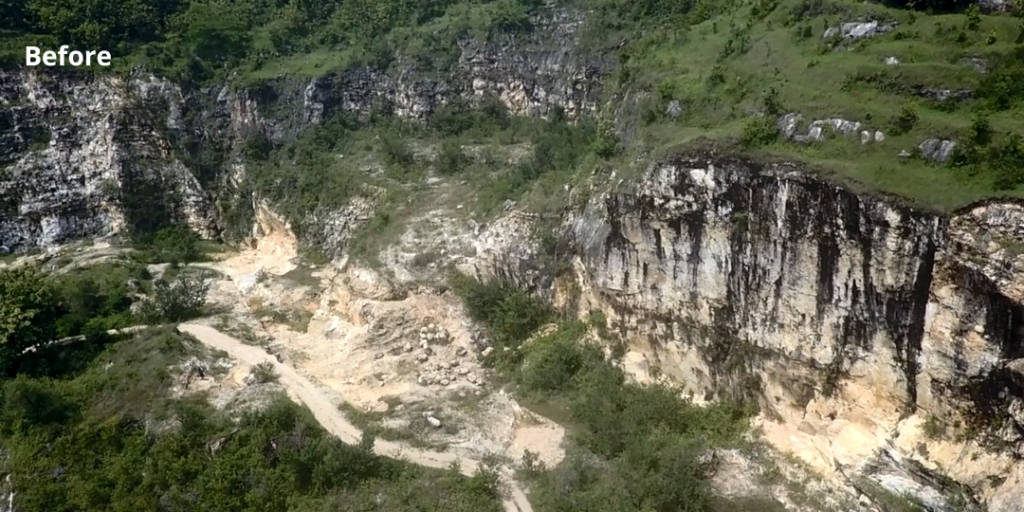
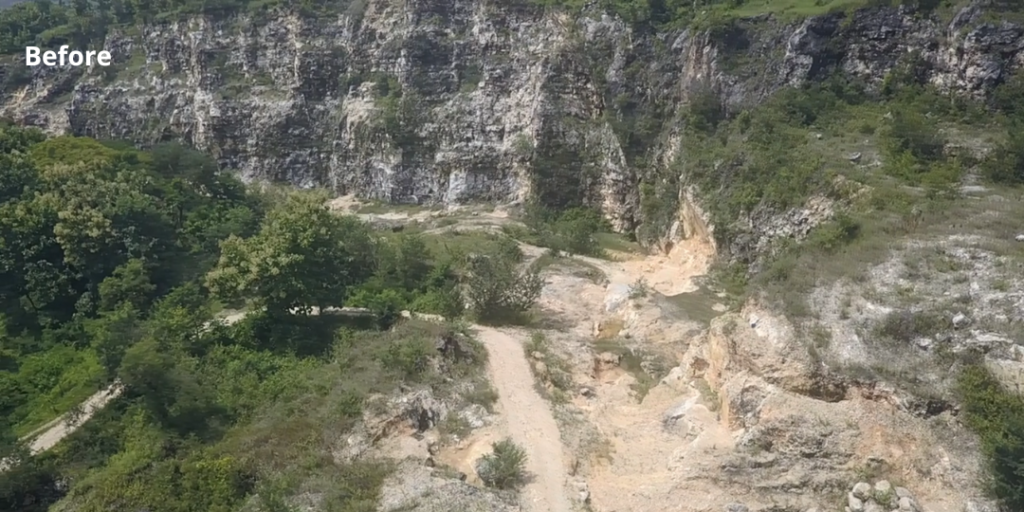
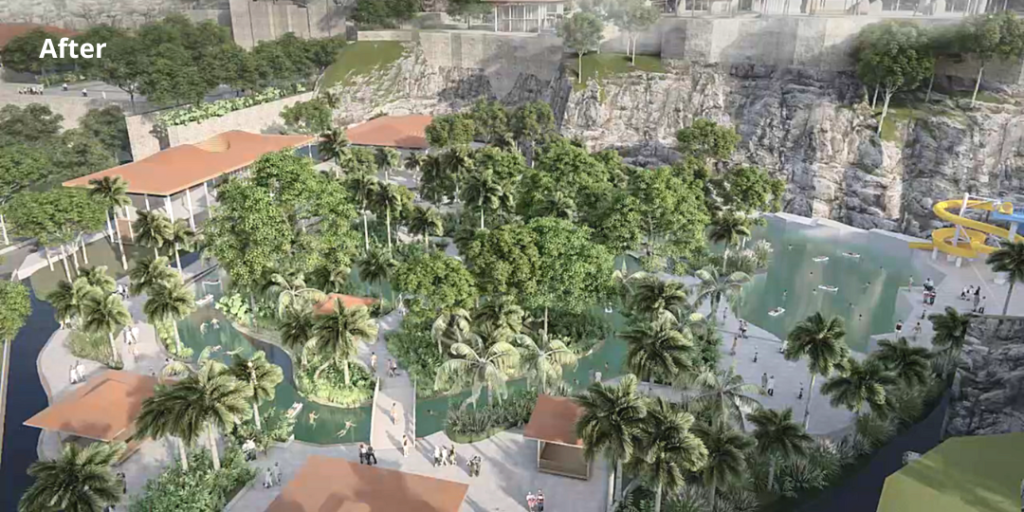
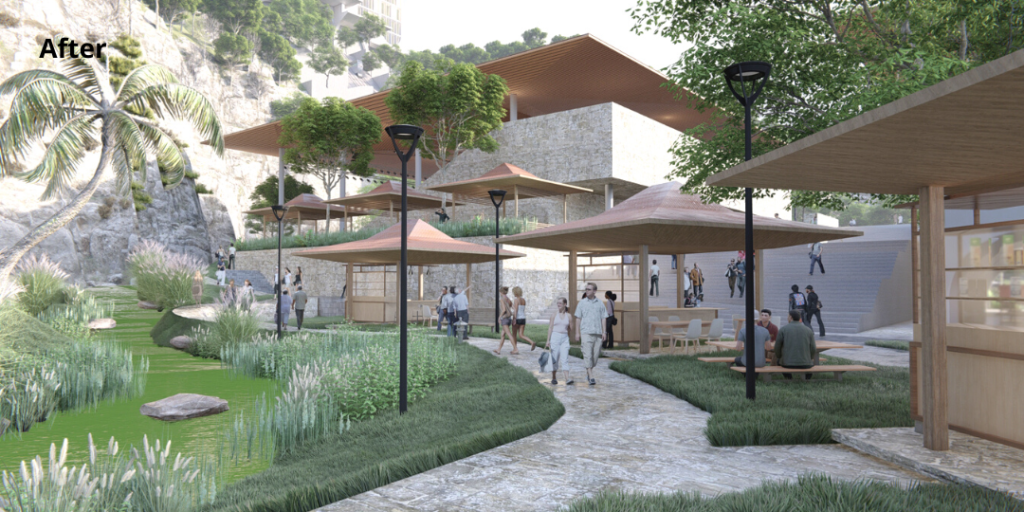
The site was previously used for limestone mining in a hilly area. Naturally, hills play an important role in storing and managing water for the surrounding environment. Therefore, the former mining land needs to be restored and transformed into a water conservation area.
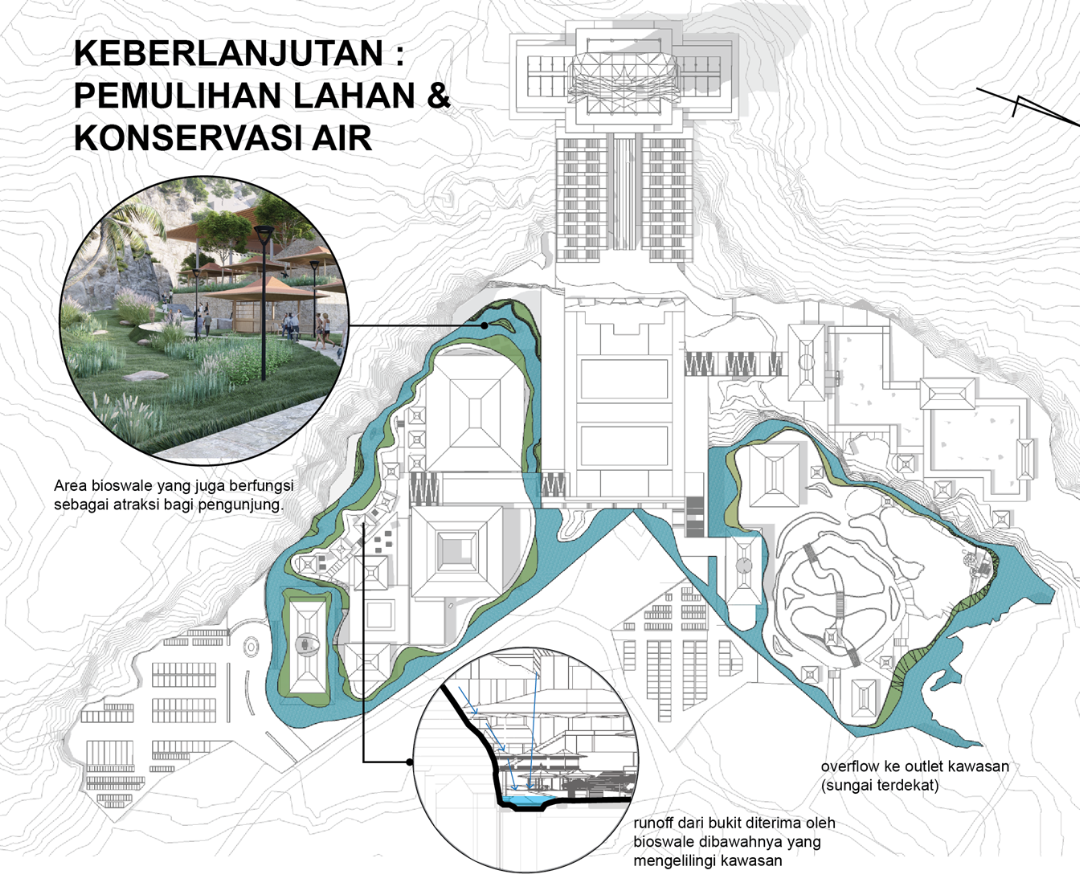
Through a sustainable design approach, TANAREKA applies bioswales that function as water absorption areas during the rainy season and as recreational spaces during the dry season. This approach helps restore the site’s role as a protected and water conservation area by reducing water runoff, while also supporting biodiversity sustainability.
Responding to Extreme Contours Through Circulation Strategy
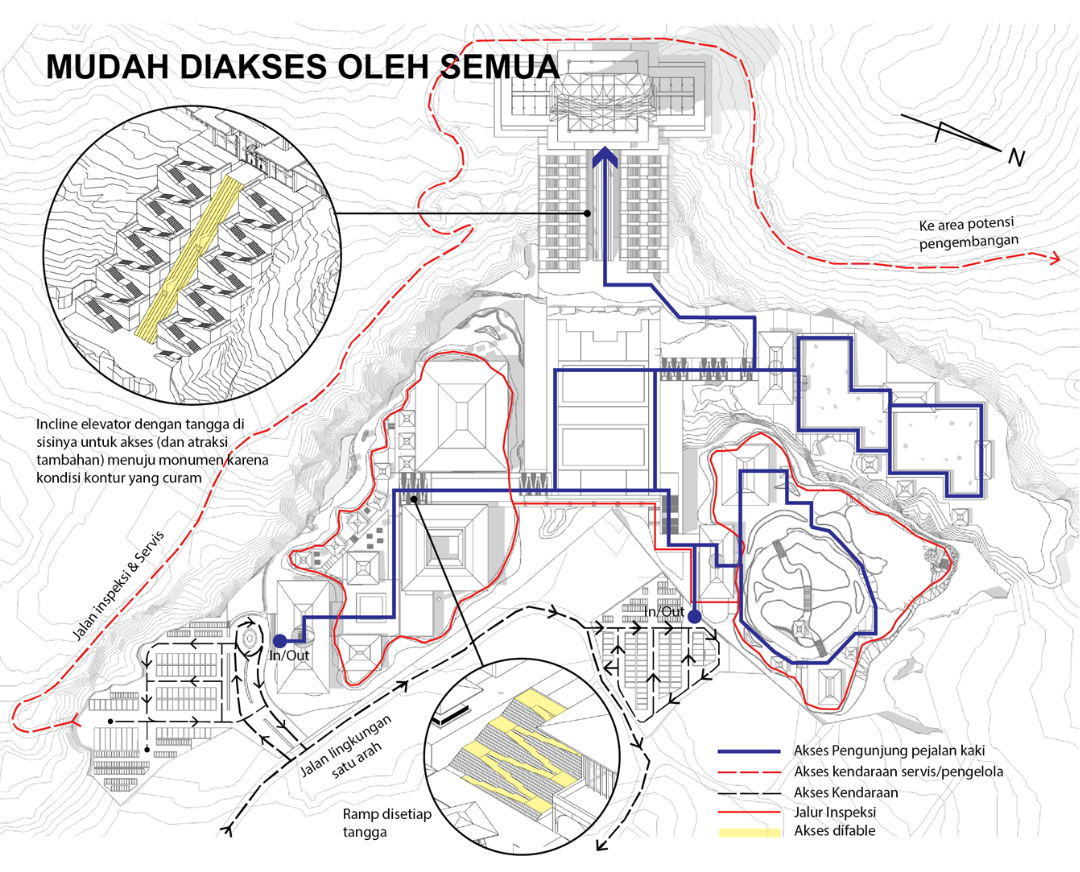
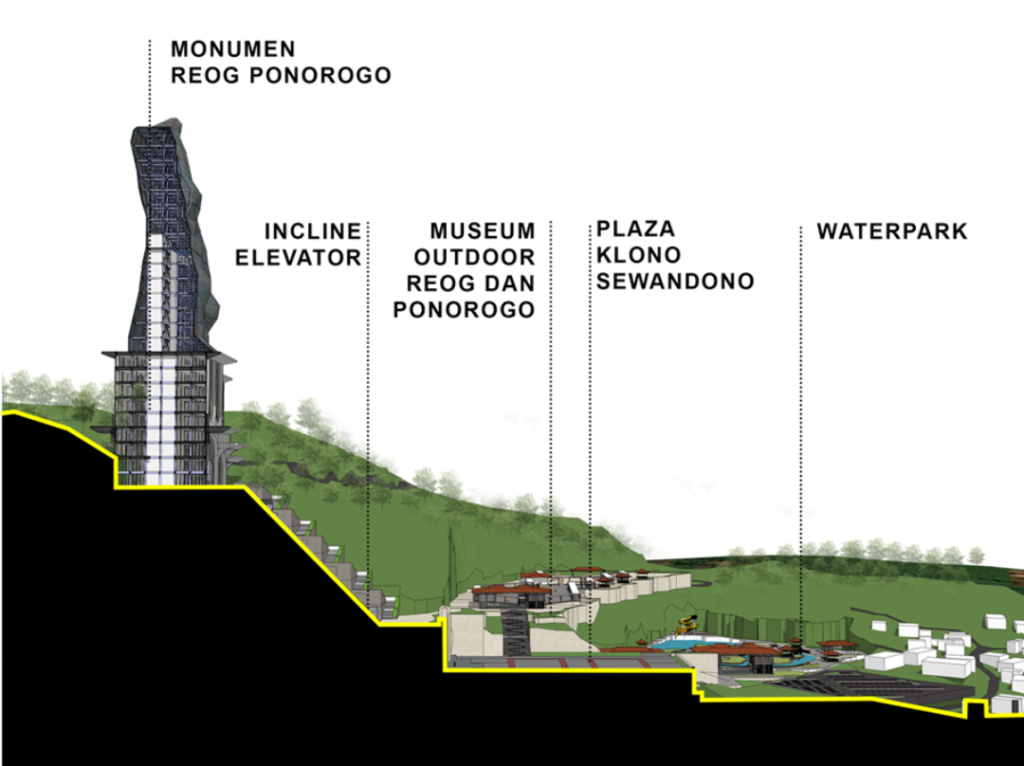
The former mining activity created an extreme landscape with steep limestone cliffs and significant elevation differences. These challenging contours became one of the main issues in providing accessible circulation throughout the site.
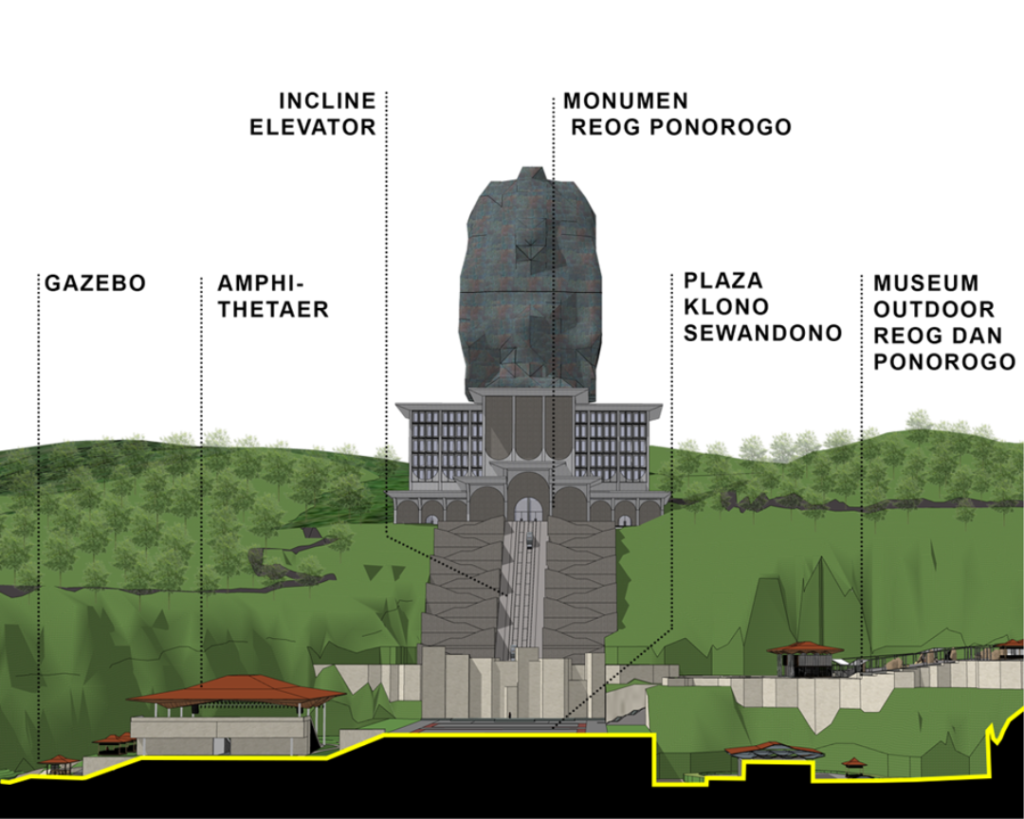
To respond to this condition, the circulation paths are extended to maintain comfortable stair and ramp slopes, while a mechanical vertical circulation system (incline elevator) is added to provide easier access to the monument area.
From Movement to Form: Reog as the Inspiration Behind the Monument
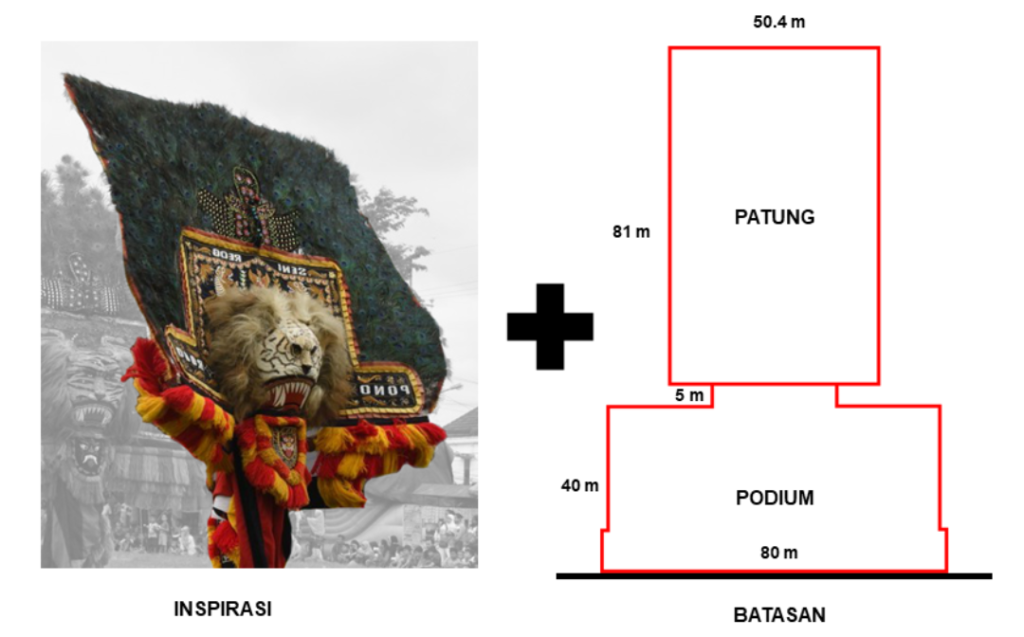
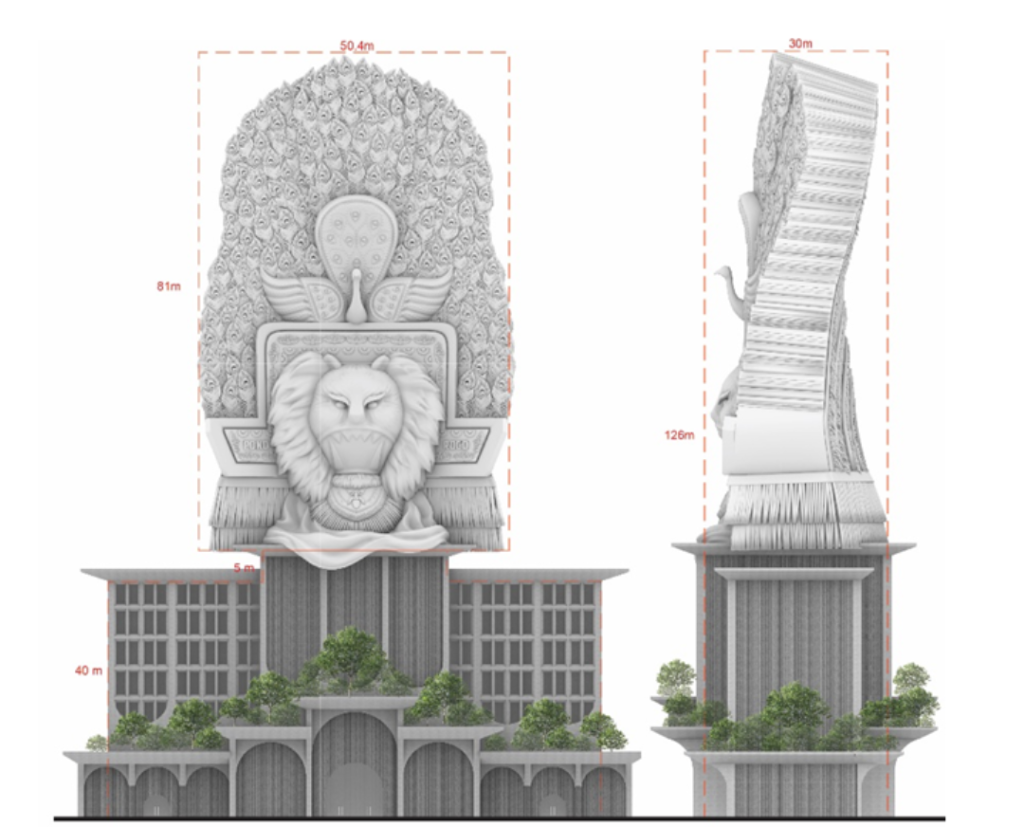
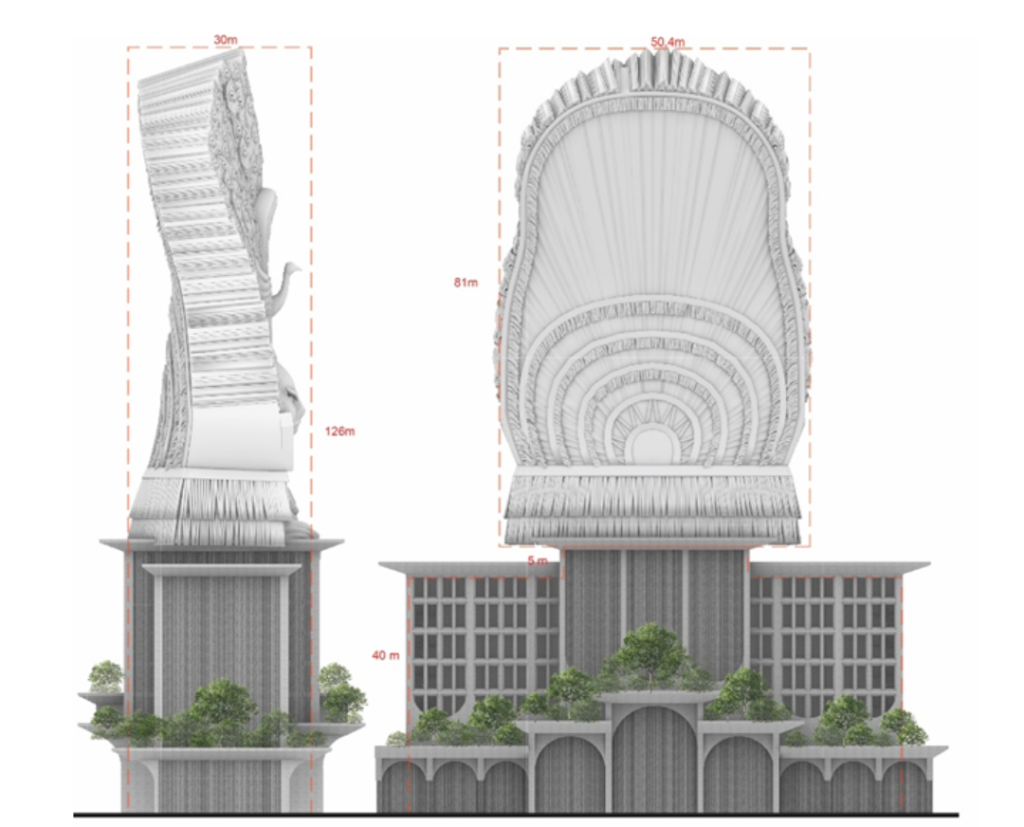
The monument’s form is inspired by the strong and elegant movements of the Reog Ponorogo dance. These dynamic gestures are translated into a flowing S-shaped composition, creating the impression that the monument captures movement in a lively and expressive way.
The design highlights essential elements of Reog while considering structural feasibility and construction limitations, ensuring the monument remains both realistic and representative.
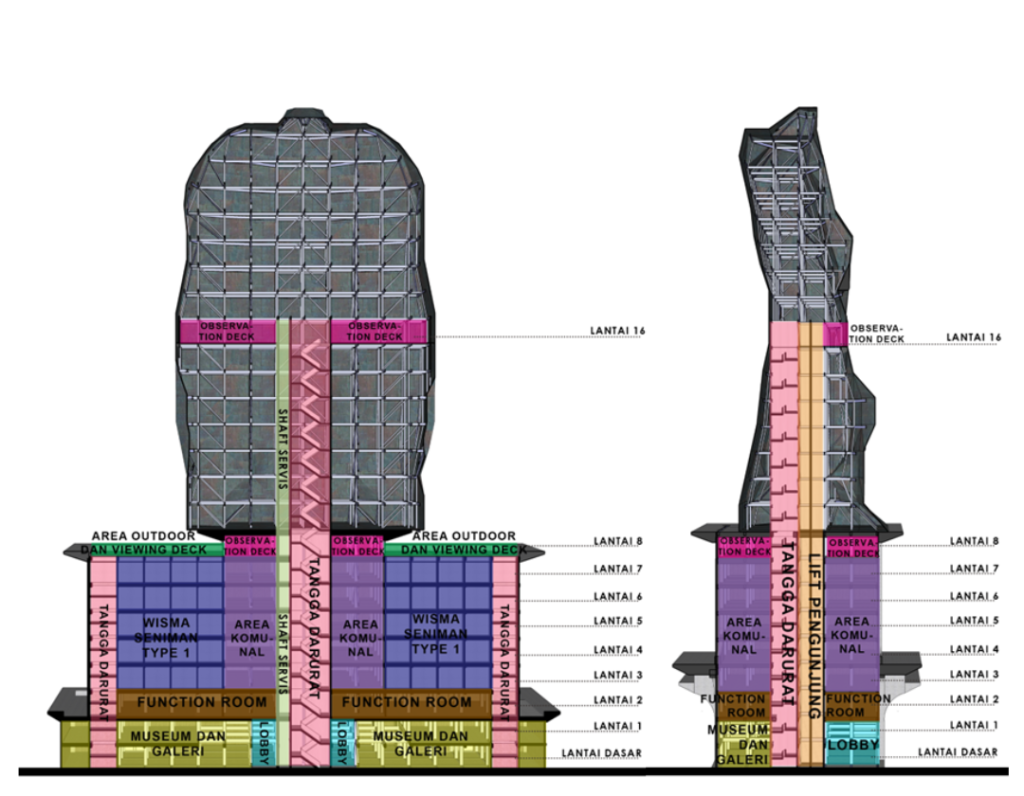
The podium is designed as a public space that accommodates a museum, gallery, function hall, artist residency, and observation deck. Meanwhile, the interior of the monument features an observation deck that also allows visitors to experience the space and structure from within.